
Searches cost $0.25 to $7.00 per 1,000
In Cloudflare's new Web Search API, one provider charges $0.25 per 1,000 searches and another charges $7.00. Cloudflare's own pages also disagree on whether the dearer one retains query data. Cloudflare put the API into open beta on 2 October 2026, during its Birthday Week, in a blog post and a changelog entry.
The API lets agents and applications search the web through AI Gateway. Ceramic.ai is the default provider, with Exa and Linkup as options, according to the providers page. That page lists these prices per 1,000 requests:
- Ceramic.ai costs $0.25.
- Linkup costs $5.00 and runs in its fast search depth.
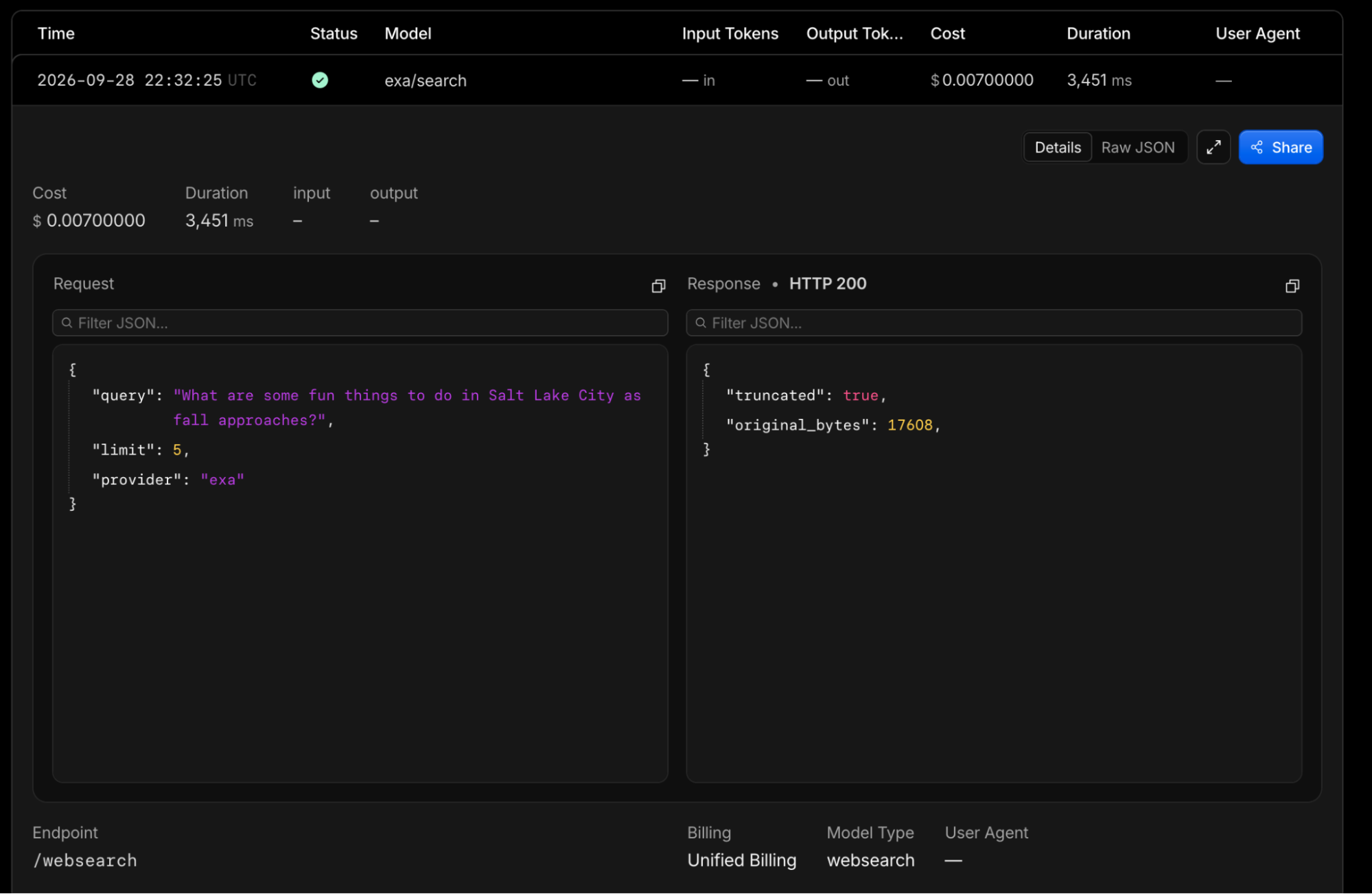
- Exa costs $7.00 and runs in its auto search type.
That puts Exa at 28 times Ceramic's price per request, and Linkup at 20 times. An agent that runs 100,000 searches would pay $25 on Ceramic.ai, $500 on Linkup and $700 on Exa at those prices.
Provider pages match Cloudflare's list prices
Cloudflare says searches draw down AI Gateway credits at each provider's list API price, with no additional markup. Customers can also bring their own provider key, and the provider then bills them directly under their own agreement, the providers page says.
The providers' own pricing pages matched those figures when The Frontier checked them between 21:35 and 21:36 SGT on 6 October:
- Exa's pricing page lists $7 per 1,000 requests for its auto and fast search types. Its instant type costs $4, but the Cloudflare integration uses auto.
- Linkup's pricing page lists $0.005 to $0.006 per request for agent search tool calls.
- Ceramic.ai's pricing page lists $0.25 per 1,000 queries pay as you go, or $0.20 on a $99 monthly Pro plan.
Ceramic.ai's page calls itself "98.6% cheaper than competitors" in its own comparison, against published list pricing of $14 per 1,000 queries.
Cloudflare released Clef and Clef-flash, its first Workers AI models, a day before this launch in the same Birthday Week. See Cloudflare Clef and Clef-flash: Apache 2.0 multimodal decision models on Workers AI, with a 64k context window.
Cloudflare also took AI Search out of beta that week, with billing from 1 November. See Cloudflare AI Search starts billing on 1 November, and semantic queries cost 7.5 times full-text.
Three Cloudflare pages describe retention differently
The changelog says "All three support Zero Data Retention for requests made through Cloudflare". The providers page, last updated 2 October, marks Ceramic.ai and Linkup Yes and Exa No in its Zero Data Retention row. The blog post says only that Cloudflare "will identify partners supporting Zero Data Retention (ZDR)".
On their own sites, Exa and Linkup tie Zero Data Retention to an Enterprise plan. None of the Cloudflare pages read for this article explains the Exa difference.
The how-to page sets two limits that shape agent design:
- A query can run to 1,024 characters.
- A request returns at most 10 results, so broad research needs several calls.
Calls go through a REST endpoint with an AI Gateway token, or through the env.AI.websearch binding in Workers. Every provider returns the same result format, so switching takes one parameter, the about page says.
That page also says every provider has committed to Cloudflare's verified bot requirements, including identifying its crawler and respecting robots.txt. Each result must link to the crawled page. The European Commission's copyright consultation lists a duty for crawlers and AI agents to disclose identity and purpose as one option. See EU targeted copyright consultation weighs an AI opt-out registry, crawler disclosure and a remuneration right, open until 3 November.
A beta with no built-in search tool yet
- The API is in open beta.
- Built-in server tools in AI Gateway are still to come. Until then, developers define the web search tool and pass results back to the model themselves, as the blog's sample code does.
- Requests to Exa use its auto search type, and requests to Linkup use its fast depth, the providers page says.
- The blog and docs read for this article compare price and retention. They publish no test of result quality or latency between providers, and The Frontier ran none.
Check the retention row before routing queries
- Teams that put customer data in search queries can rely on the providers table, which marks Exa No, until Cloudflare aligns its pages.
- Teams with their own Exa or Linkup contract can bring their key. The provider then bills them under their own agreement, and both providers sell Zero Data Retention on Enterprise plans.
- Requests without a provider parameter go to Ceramic.ai. Setting the parameter moves the list price between $0.25 and $7.00 per 1,000 requests.