
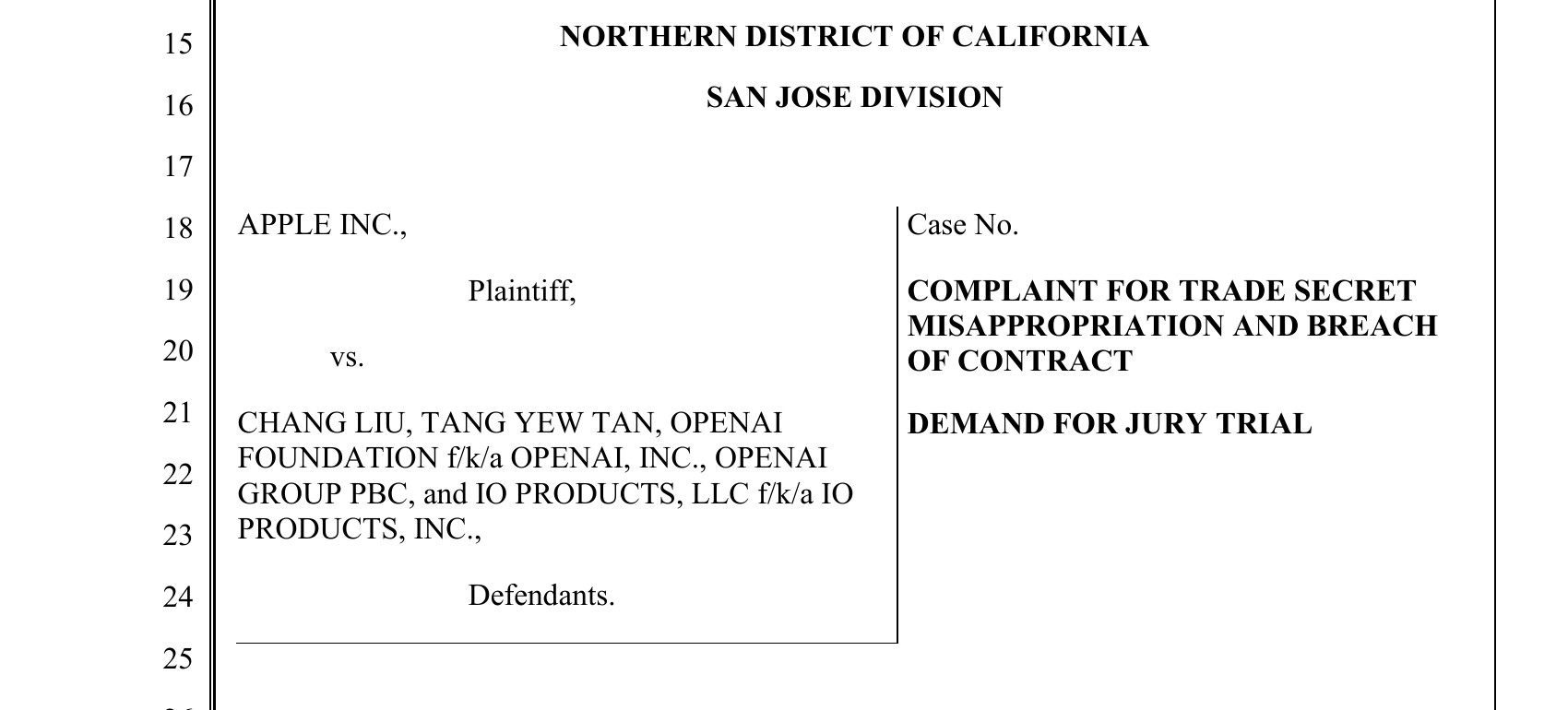
On 13 October 2026, Judge Edward J. Davila gave Apple a limited early look into OpenAI’s hardware recruiting trail and into devices already imaged for this case. The same order vacated the discovery oral argument that had been set for the next day. What remains on the San Jose calendar for 14 October is the fight that matters for the next phase of the lawsuit: Apple’s preliminary injunction and OpenAI’s motion to dismiss.
This is a docket update, not a restart. The complaint, the MacBook forensics, and the September continuance are already mapped in Frontier’s Survey, From an unrecovered laptop to an October hearing. What follows is what changed this week.
Davila grants Apple a narrow early look at devices and hiring records
Davila’s order, Dkt. 175 in Apple Inc. v. Liu, No. 5:26-cv-07078-EJD, grants Apple’s expedited-discovery motion in part. Under Local Rule 7-1(b), he found the discovery dispute suitable for decision on the papers and vacated the 14 October hearing on that motion alone.
The production clock is short. Defendants must respond within fourteen days of the order, or within five days for materials they have already collected for this litigation. The granted buckets are concrete. Apple gets forensic images Defendants have already collected and relied on in the case, including images identified in the Crain declarations. It gets documents used to guide or conduct interviews of Apple candidates for OpenAI’s Consumer Hardware Products Group and Robotics Group, checklists, guides, scripts, and technical deep-dive presentations that memorialise those interviews or reference Apple technology or parts. It also gets Chang Liu’s LINE conversations with Yu-Ting (“Alyssa”) Peng since 1 January 2026, including threads cited in Liu’s August declaration.
Davila’s good-cause analysis does not find liability. It does treat Apple’s pending injunction, the centrality of the device forensics to that motion, and the risk that logs and metadata can vanish as reasons to move a tailored slice of discovery forward. He notes the Liu-Peng discussion about restoring Apple-owned devices. He also accepts that alleged secrets can become hard to untangle once they sit inside a competitor’s hardware programme. Those are reasons to look early. They are not a verdict.
Liu, Tan, and Peng must sit; OpenAI answers a limited 30(b)(6)
The order grants 30(b)(1) depositions of Chang Liu, Tang Yew Tan, and Alyssa Peng on the narrowed topics, to be completed within thirty days after Apple receives all responses permitted by the order. A fourth named individual in Apple’s narrowed list is denied for now.
Corporate defendants OpenAI Foundation, OpenAI Group PBC, and io Products must also put up a Rule 30(b)(6) witness on a limited role topic: the positions and responsibilities of the designated witnesses, of Tan and Liu, of Peng, and of one redacted name. Davila declined Apple’s bid to treat these depositions as free extras beyond the usual Rule 30 caps. If the parties later need more, they can move again.
Discovery argument is vacated; the injunction fight is not
It is easy to misread the vacatur. Dkt. 175 cancels oral argument on expedited discovery. It does not cancel Apple’s preliminary-injunction motion or OpenAI’s motion to dismiss. Bloomberg Law, TechCrunch, and Quartz all treated 14 October as the first high-stakes hearing on those two filings, with Davila already having decided the discovery slice the day before.
Apple wants an order that would stop OpenAI and the individual defendants from using alleged Apple confidentials while the case proceeds. OpenAI’s dismissal papers argue that Apple has pleaded broad hardware categories rather than identified secrets, and that the story is as much about Apple’s own offboarding and access controls as about recruiting. In an October filing quoted by Bloomberg, OpenAI wrote that it is building “a new family of devices designed for the AI era” and has “no need or desire for Apple’s trade secrets.” Bloomberg’s hearing preview also floated reporting that OpenAI’s first consumer device may be a doughnut-shaped smart speaker priced above $300. That product colour is secondary. The calendar point is not.
As of the sources checked for this update, there is still no public minute entry or written order disposing of the injunction or the motion to dismiss. If Davila rules from the bench or takes the motions under submission, that fact should appear on the docket before anyone treats Wednesday as a merits end date.
Metal, power, and battery R&D stay off the emergency clock
What Apple did not get on an emergency schedule is as important as what it did. Davila denied expedited production of documents related to OpenAI’s research and development on metal finishes, power management, or battery functionality for consumer hardware, including communications with a redacted counterpart. Those topics, he wrote, belong in ordinary merits discovery.
He also deferred every request and deposition topic that incorporates the phrase “Apple Originated Information.” As defined in Apple’s narrowed set, the term reaches information created for or by Apple, or learned in support of Apple business, that is not fully public. Davila called that definition amorphous and potentially an “extremely burdensome, and perhaps untenable task.” Apple has five days from the order to confer and propose a tighter definition if it wants those requests revived.
The split matters for anyone reading hardware-race headlines into the docket. Early access to interview scripts and already-collected images is a preservation and scoping tool. It is not a licence to rummage OpenAI’s active finish, power, and battery work before the usual discovery machinery turns.
Read the Survey for the timeline; watch the docket for the ruling
If you need the path from the unrecovered laptop through the August MacBook image and the September continuance, stay with the Survey. If you need this week’s delta, watch three clocks: the five- and fourteen-day productions under Dkt. 175, Apple’s five-day chance to re-define “Apple Originated Information,” and any minute entry from the 14 October injunction and dismissal hearing. Until that entry exists in public form, treat the hearing as argument day, not judgment day.