
Two candidates, no measured band gap yet
An AI agent search for a room-temperature magnetic semiconductor produced two candidates, and the agents' own reviewers graded neither as a breakthrough. Nobody has measured either material's band gap, spin polarisation or conductivity, the project's ledger says.
The results appear in a Vals AI blog post by Geby Jaff, dated 4 October 2026. It says the author and a team of AI agents designed one candidate and found another, first made in 1999.
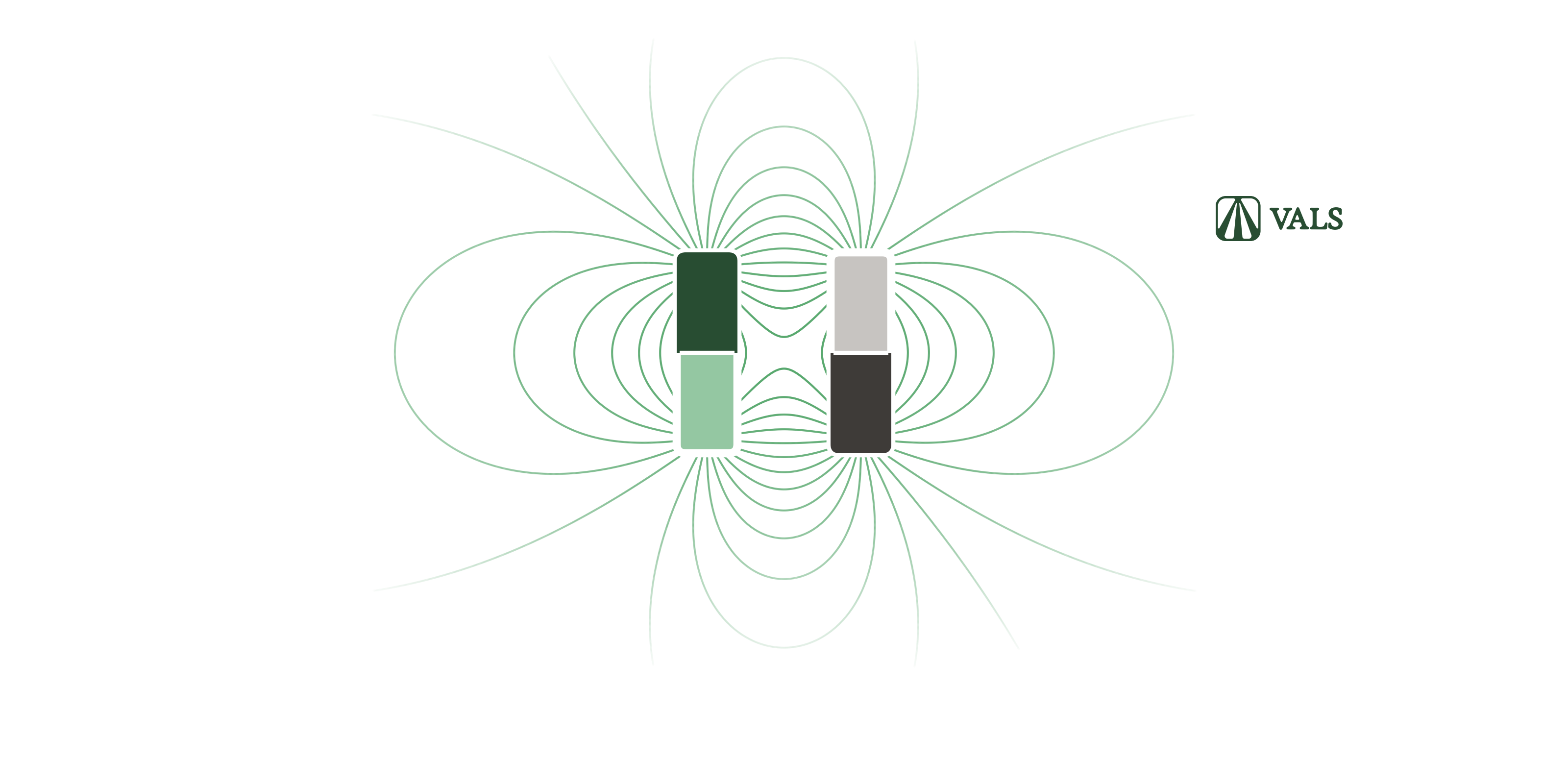
Both are Luttinger-compensated magnets, in which opposite spins cancel to a zero net moment while electrons near the band edges still sort by spin. The post presents that combination as useful for future computer memory.
A February 2025 arXiv paper by Guo and colleagues says it predicted the first two such semiconductors, Mn(CN)₂ and Co(CN)₂. The Vals post says that study found both lose their magnetic order below room temperature.
The two candidates differ in how close they are to a lab:
- YBaMnFeO₅ is a new design that, as far as the authors found, nobody has made.
- KV[Cr(CN)₆] is a Prussian blue relative that chemists made once, as a hydrated powder.
Claude Opus 5.5 agents ran the calculations
The blog post names no model. Its linked GitHub ledger says "a team of Claude Opus 5.5 agents (Anthropic)" ran density functional theory calculations on cloud computers from 1 to 4 October. Humans set goals, directed the search and decided what to publish, the ledger says.
The agents worked under pre-registered pass and fail rules, with adversarial referee agents that tried to kill each claim. Other lanes of the broader search found nothing above their bars, and their results are left out of the repository, the ledger says.
Anthropic released the model in September. See Anthropic ships Claude Opus 5.5 on 22 September with Fable-class claims at lower list prices.
The ledger's own grades and corrections
The blog post leaves out the grades that the ledger's status table sets beside the predictions.
| YBaMnFeO₅ | KV[Cr(CN)₆] | |
|---|---|---|
| Predicted band gap (HSE06) | 2.35 eV | 2.09 eV |
| Orders above room temperature | Predicted, about 420 K raw | Measured, 376 K on the 1999 powder |
| Can it be made | May be hard with standard methods | Made once, as a hydrated powder |
| Agents' review grade | "design study, not a realizable discovery" | Solid identification work and "not a breakthrough" |
Re-reading every raw output, plus an outside reader's literature check, turned up five problems in the agents' records:
- YBaMnFeO₅ sits 13.7 meV per atom above the stability hull, against the agents' 2.6.
- One HSE06 run for the water-containing crystal had not converged, and finishing it cut the hole window from 2.43 eV to 2.31 eV.
- Two cation arrangements and one vacancy cell used geometries whose relaxation stopped early.
- One of 96 cation-ordering outputs was truncated.
- The agents missed a 2008 study of the same crystal whose plot already shows the same-spin band edges.
Both corrections that changed headline numbers moved them in the less favourable direction. The water-containing crystal is the only form ever made, and its converged hole window is 2.31 eV. The blog's 2.6 eV figure is for a perfect, dry crystal. After reading that 2008 paper, the ledger narrowed its novelty claim to pointing out, quantifying and stress-testing the effect.
The older compound exists only as a 1999 powder
The Crossref record places Holmes and Girolami's 1999 paper in the Journal of the American Chemical Society. Its title reports magnetic ordering above 100 °C, in line with the ledger's 376 K for the sample.
That sample held water and showed a small leftover moment of 0.125 Bohr magnetons per formula unit. The two calculation methods disagree on how much water harms the effect.
The 2008 study by Middlemiss, Lawton and Wilson examined Prussian blue analogues under pressure, its Crossref record shows.
For the designed compound, the needed checkerboard of manganese and iron scrambles at about 950 K in the agents' simulation. One swapped pair closes the spin-selective gap, the ledger says.
The ledger adds that the results describe ideal crystals at zero temperature. Its zero moment is a spin-only result, and these methods can misplace energy levels by tenths of an electronvolt.
Re-make the 1999 compound first
- Until a lab measures it, the spin sorting in both materials remains a prediction.
- The ledger names re-making KV[Cr(CN)₆] as the cheapest test, followed by X-ray and photoemission checks of the spin sorting.
- Readers can rerun the arithmetic in seconds with the repository's checker, which reported 58 passes and no failures on 4 October.
- The Frontier checked the repository at 21:34 SGT on 6 October. Its latest commit was from 10:35 SGT on 5 October, and it had no open issues.
Claude agents also drove Anthropic's September phage enzyme claim, where enzyme activity was not yet shown. See Anthropic says Claude agents found ART, a phage RT system with CRISPR-like repeats, on 23 September.