
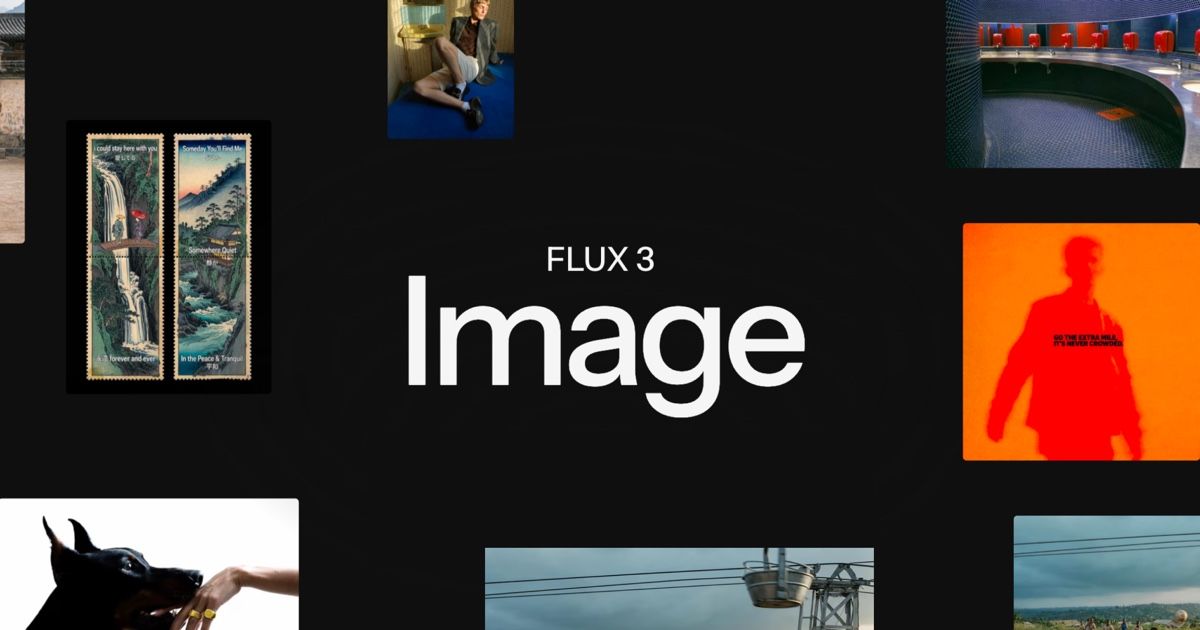
FLUX 3 Image opens on the BFL API
Black Forest Labs published FLUX 3 Image, the image generation and editing part of its FLUX 3 family. The page says you place each element with a bounding box, then generate or edit inside those boxes.
It supports text to image, image to image editing and up to 10 reference images. An example on the page shows a native render at 5456 by 3072 pixels.
The canvas uses a 0 to 1000 grid on both axes. Each box is written as [y_min, x_min, y_max, x_max].
Black Forest Labs and API customers
Black Forest Labs owns the model, the Playground and the commercial weights licence. Companies that want to fine-tune and deploy on their own infrastructure are told to reach out.
An agent can plan the layout from one line and an aspect ratio, the FAQ says. Every box stays editable after that plan.
Pixel locked edits and agent layouts
The page stresses multi-step edits that leave untouched pixels alone. Each box can be re-described, replaced or moved while the rest of the image stays put.
A prompt upsampler may expand a short request into a dense caption. Boxes the user drew, the FAQ says, reach the model with the same id and coordinates.
This is separate from FLUX 3 Action, which maps frames and text to robot action chunks.
Commercial weights now, open weights later
The page offers commercial weights for self-hosting. It does not publish an open-weight download on the model page The Frontier read.
Pricing for API calls is not printed in the main body The Frontier extracted. The page points users to the Playground and the BFL API.
No independent quality board is cited on the page.
Design tools and agent image pipelines
- Product teams that need strict layouts can try bounding boxes in the Playground before wiring the API.
- Agent builders can have an LLM emit the caption and element table, then keep boxes editable.
- Buyers who need open weights should wait for a later release. FLUX 3 Action's open checkpoints are a robotics model, so they are not a substitute.