Uthmeier files a 49-page injunction motion
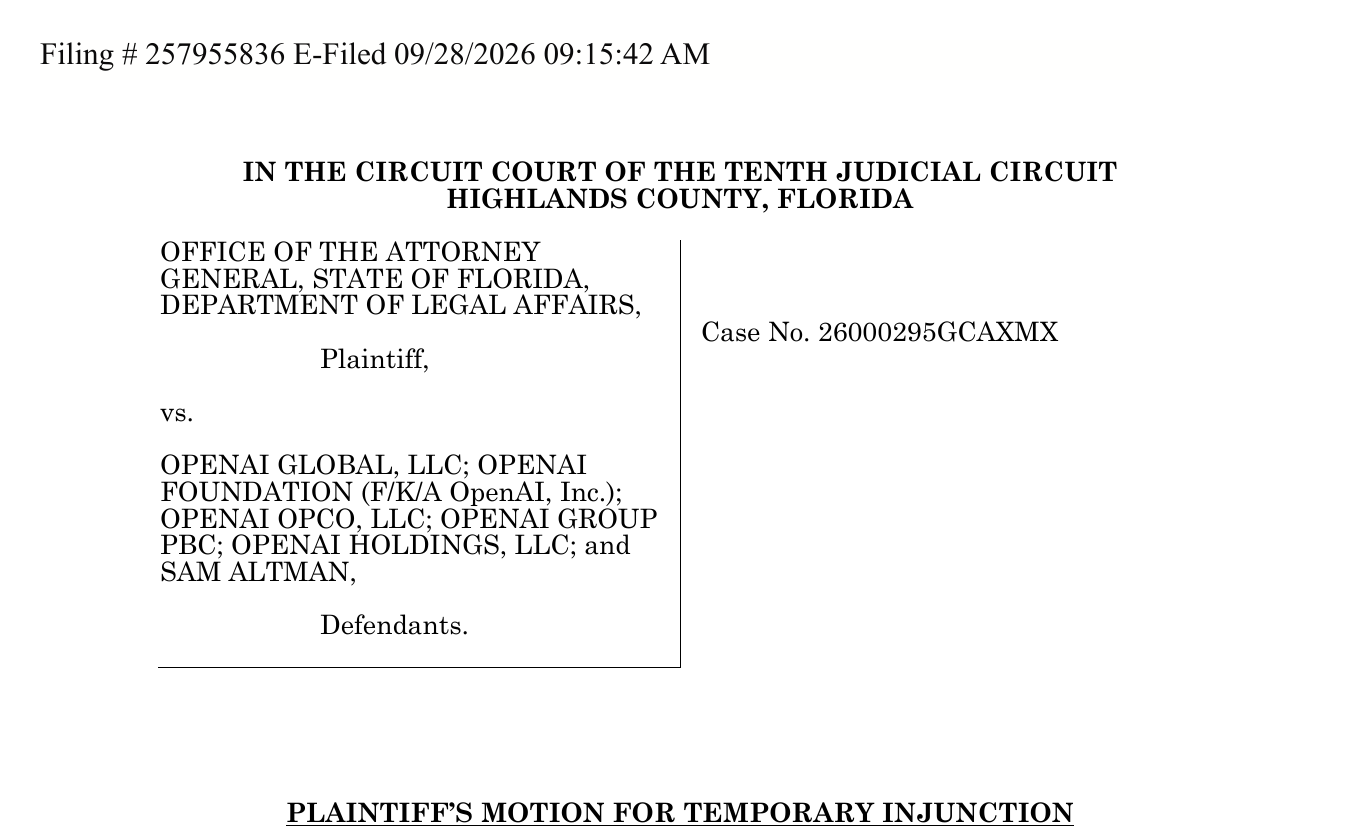
On 28 September 2026 Florida Attorney General James Uthmeier filed a motion for temporary injunction against OpenAI and its CEO Sam Altman. The PDF has 49 pages: a caption page, nine pages of contents and authorities, and 39 numbered pages. The motion was e-filed at 9:15 a.m. US Eastern time (21:15 SGT) in the Circuit Court of the 10th Judicial Circuit, Highlands County. The case number is 26000295GCAXMX. The Attorney General's office posted the as-filed motion with a news release.
The Attorney General first sued on 1 June 2026. The complaint alleges violations of Florida's Deceptive and Unfair Trade Practices Act (FDUTPA). It also alleges negligence, defective design, failure to warn, fraudulent misrepresentation and public nuisance. The defendants removed the case to federal court. The motion says Judge Cannon ruled that the defendants "clearly fail[ed]" to meet the test for federal jurisdiction. The case is back in Highlands County.
Five OpenAI entities and Sam Altman
The motion names OpenAI Global LLC, OpenAI Foundation (formerly OpenAI Inc.), OpenAI OpCo LLC, OpenAI Group PBC, OpenAI Holdings LLC and Sam Altman.
Diane K. Oates signed the motion for the Attorney General's office. Ashley Keller of Keller Postman LLC also appears on the signature block. The certificate of service says the motion was served on 28 September through the Florida Courts E-Filing Portal.
Six requested bans, from model development to minors
The motion asks the court to bar the defendants from six acts or practices while the case is pending:
- A: developing any AI models "without independent third-party guardrails and approval";
- B: offering ChatGPT to minors in Florida;
- C: collecting data from children under 13 in Florida without written notice, verifiable parental consent, parental review rights, data minimisation and security procedures;
- D: misrepresenting ChatGPT's safety, reliability and accuracy, or failing to warn that it is unsafe, unreliable and inaccurate;
- E: misrepresenting that ChatGPT has human attributes, including any first-person language;
- F: soliciting engagement through conversation prolongation.
Request A reaches past consumer conduct into model development itself. To support it, the motion cites the Hugging Face, RubyGems, Australian health service and US government incidents. It quotes Paul Christiano, whom it calls OpenAI's newest board member, on a "meaningful risk" of "catastrophic and irreversible loss of control". It also cites Altman's 23 September remarks at the UN Security Council.
The motion argues that Florida law lets the court set no bond for the Attorney General, citing Section 60.08.
No hearing date, ruling or OpenAI response
- The motion sets no hearing date. The documents the Attorney General posted show no ruling.
- The motion admits the Attorney General "has yet to secure any discovery from the Defendants".
- The relief text for request A does not define "independent third-party guardrails" or name an approver.
- The filing is one side's argument. The Frontier found no OpenAI court response in the documents the Attorney General posted.
Track the Highlands County docket this month
- OpenAI watchers should follow the Highlands County docket for a hearing notice or an OpenAI response under case 26000295GCAXMX.
- Companies that offer chatbots to Florida users should review first-person language, engagement prompts and under-13 data flows against requests C, E and F.
- Consumer AI teams in other states should watch whether other attorneys general file similar motions.
- Policy teams should note request A. It asks a state court to gate frontier model development on third-party approval.