
Anthropic opens a wet lab and names ART
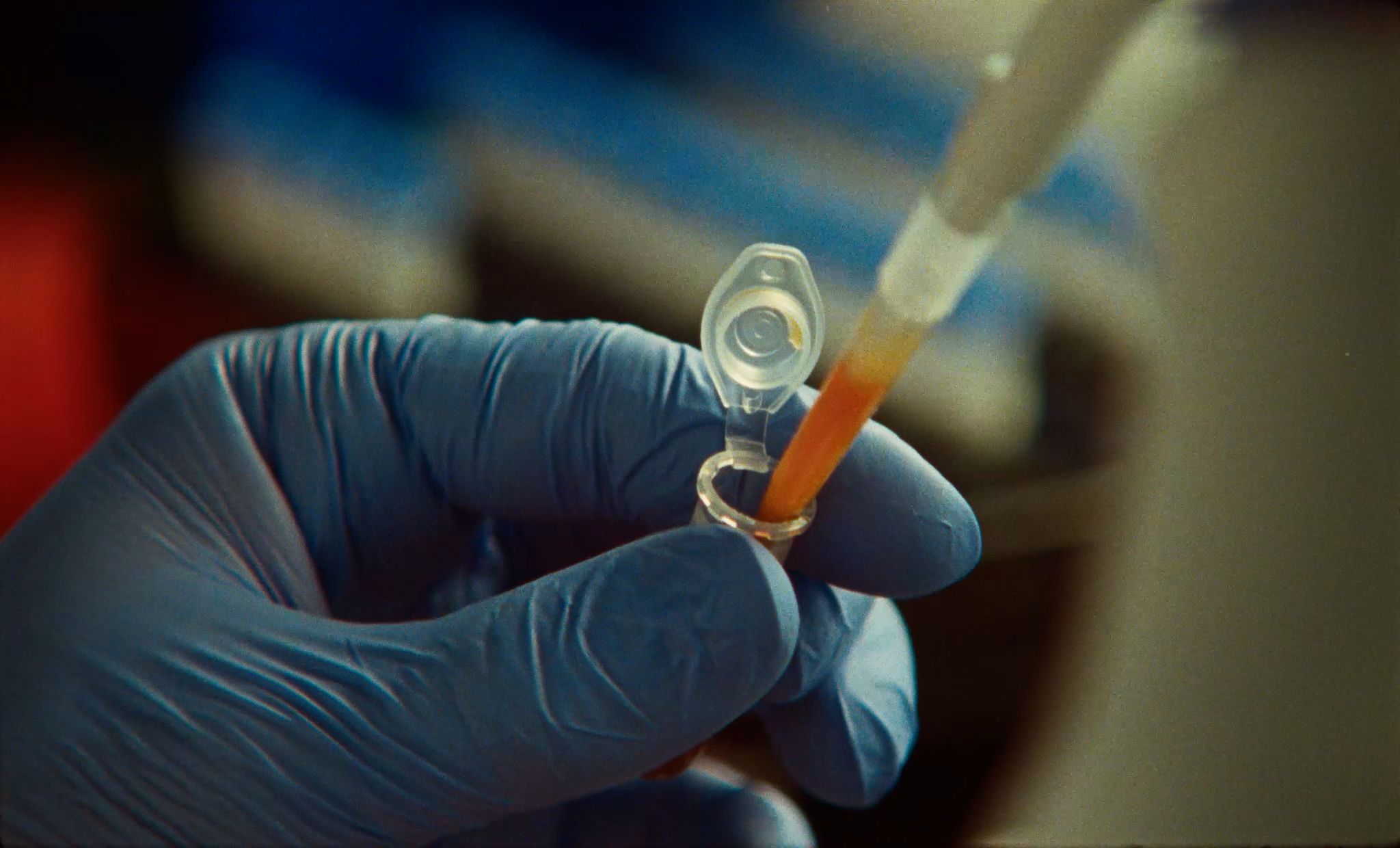 Caption: Hero art published with Anthropic's 23 Sep 2026 science post · Source: Anthropic, Claude discovers a novel enzyme system with CRISPR-like repeats · link
On 23 September 2026 Anthropic published Claude discovers a novel enzyme system with CRISPR-like repeats. The post introduces a new Anthropic life sciences research group and Bay Area wet lab, and shares early results from an autonomous Claude genome-mining campaign.
Claude agents named a jumbo-phage reverse transcriptase system array-associated reverse transcriptases (ART): an RT, a dedicated partner gene, and an upstream array of evenly spaced DNA repeats. Anthropic says the underlying RT had appeared in earlier studies. Claude appears to have been first to flag the repeat array and the partner gene together as a system.
A companion preprint, Autonomous AI agents discover reverse transcriptases with tandem repeat arrays, reports campaign counts, RNA-seq follow-up on phage SA1, and fixed-input recognition benchmarks across Claude models.
After reviewing the preprint, Feng Zhang (MIT / Broad) said the identification of RNA-repeat arrays associated with reverse transcriptases "is genuinely intriguing and merits further investigation."
Phage labs and Claude buyers
Nobody is bound by a science post or an unreviewed preprint.
- Life-sciences and drug-discovery teams that already run Claude Science / Claude Code on sequence data decide whether to copy the harness pattern (worker + supervisor + shared record).
- Genome-mining and phage-biology groups decide whether ART loci join their RT survey queues.
- Procurement and model-governance staff should treat Mythos 5 / Opus-class claims here as vendor-reported research. The documents do not certify a discovery SLA.
- Anthropic remains responsible for BSL-1 / BSL-2 lab practice. The post states humans run the wet work and that the lab does not handle human-infecting pathogens.
949 agent sessions, 1.9 billion clusters, one repeat array
- Anthropic publicly stands up an in-house molecular biology lab beside its life sciences org, focused on AI-accelerated fundamental biology. The news post places the lab in the Bay Area.
- A briefed Claude Mythos 5 harness surveyed reverse transcriptases across about 1.9 billion metagenomic protein clusters. The preprint counts 119 tasks, 949 agent sessions, 77 agent-hours, and 215.6 million tokens over 21.5 hours wall-clock without human intervention during the campaign. The news post rounds those figures (about 950 agents, 210 million tokens, 21 hours).
- Agents recovered on the order of 200,000 RT clusters, scored thousands of candidate partner families, and filed 19 human-readable reports. ART ranked high in a tournament-style ranking of those reports.
- ART loci mainly sit in bacteriophages. Arrays show 3 to 21 short repeats (15 to 49 nt) with 120 to 220 nt spacers. No cas genes sit near the assessed ART loci.
- On published Staphylococcus phage SA1 infection RNA-seq (BioProject PRJNA836150), array-derived RNAs reach as much as 8% of phage RNA at 15 minutes post infection. Plasmid expression in E. coli also yielded discrete short array RNAs.
- Fixed-input benchmarks in the preprint show a capability gap: Opus 5.5, Mythos 5.1, Mythos 5, and Opus 5 recognize ART features more reliably than Opus 4.6, Opus 4.8, and Sonnet 5 when DNA is actually read into context.
- Anthropic publishes the finding early while ART's biological function remains open, and invites external research proposals.
No proof yet of enzyme activity
- Anthropic has not shown that the ART reverse transcriptase is enzymatically active, that the short array RNAs are its substrates, or that the RT and partner form a working complex in vivo.
- The CRISPR comparison is architectural (repeat array + programmable-looking RNA bank). The documents do not show gene editing, DNA cutting, or a therapeutic tool.
- The underlying RT sequence was already in the literature for some phage genomes. Novelty claimed here is the system definition: array plus partner plus RT. The polymerase domain alone is not presented as a first sighting.
- Reruns of the same campaign in the preprint often sampled ART loci but missed the array when workers did not read enough upstream DNA. Discovery is harness- and context-sensitive.
- Pricing, rate limits, and which exact Claude SKU an outside lab must buy to reproduce the campaign are not stated in the news post.
- Peer review of the preprint has not completed.
Before anyone says "AI found a new CRISPR"
- Read the news post and the PDF before briefing executives. Quote the open function and the "not shown active" language when anyone says "Claude found a new CRISPR."
- If you run agentic genome mining, pin model ID and require workers to load enough contiguous flank DNA into context before novelty calls. The preprint's fixed-input benchmarks show recognition rising sharply when at least 200 nt of contiguous locus DNA is read; keep a supervisor kill-test against known RT classes (retron, DGR, CRISPR-linked).
- If you buy Claude for biology, treat this as evidence that Mythos/Opus-class models can notice sequence anomalies under a strong harness. Do not treat it as proof that your ticket queue will yield a publishable enzyme next week.
- Ignore webinar rewrites that collapse ART into "AI invents gene editing." The primary documents refuse that claim.