
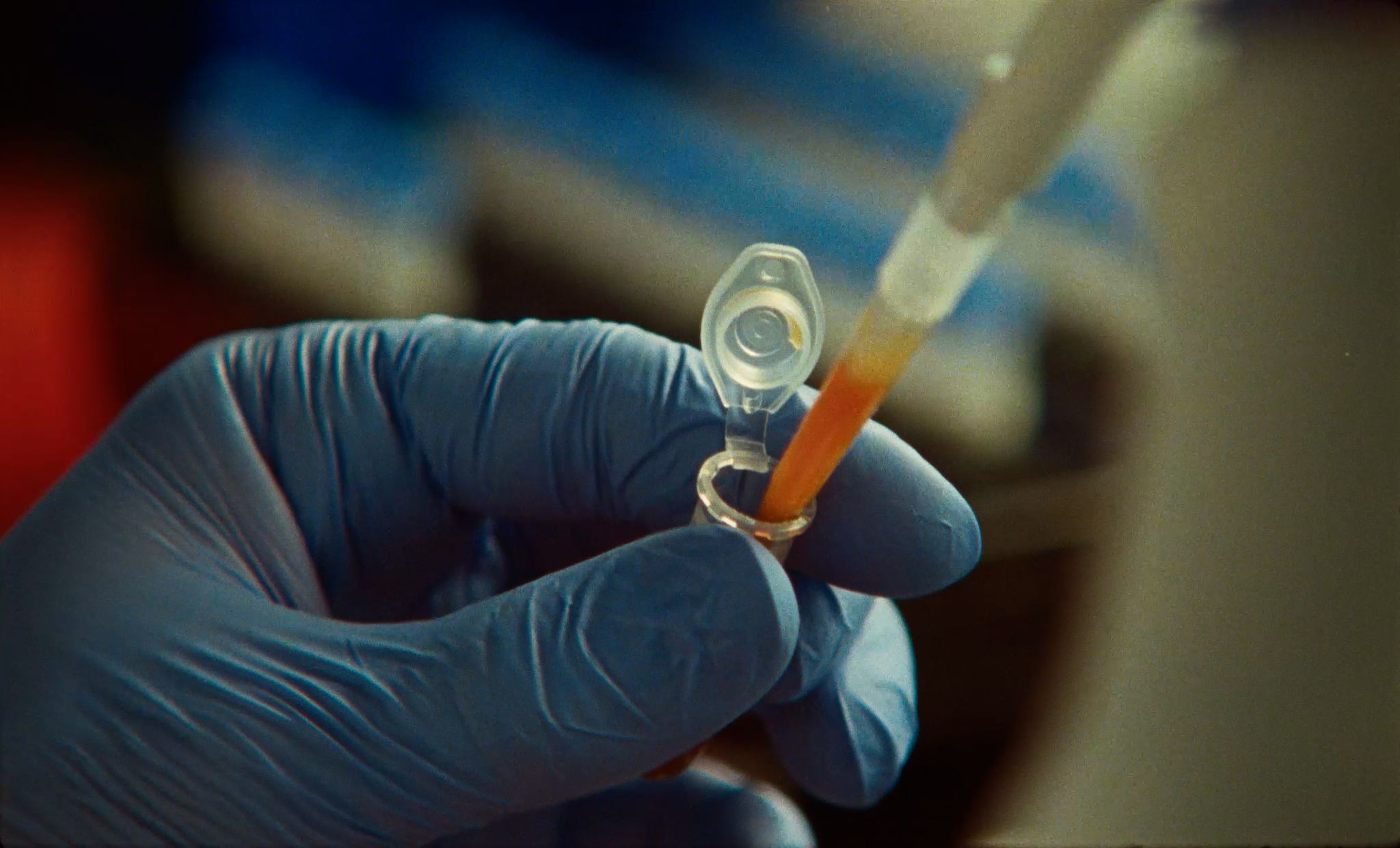
AI-driven discovery of a novel enzyme system
On 23 September 2026, Anthropic announced that its new life sciences research group--combining a wet lab with AI agents--discovered a novel enzyme system with properties reminiscent of CRISPR. The system, named array-associated reverse transcriptases (ART), was found in bacteriophages (viruses that infect bacteria) and features an associated array of non-coding DNA repeats and an additional accessory protein of unknown function.
The discovery emerged from a new way of working Anthropic established in spring 2026: a single team building and running a wet lab where AI agents collaborate with humans at every step. Researchers gave Claude a prompt to search a massive database of DNA sequences for interesting reverse transcriptase (RT) examples. Over 21 hours, roughly 950 Claude agents using 210 million tokens combed through the database, investigated distinct RT families, and used their own judgment to identify candidates. One agent spotted a remarkable repeating pattern of DNA sequences next to the gene for an unusual RT.
After further computational analysis and experimental validation in Anthropic's lab, the pattern marked a previously uncharacterized enzyme system in jumbo phages. The underlying RT had been identified in prior studies, but Claude appears to be the first to notice the system's defining features: the associated array of non-coding DNA sequences and the accessory protein.
AI agents as hypothesis generators in biology
Anthropic frames this as a new paradigm for biological discovery: AI agents systematically search molecular databases, generate hypotheses, and prioritize candidates for human experimental validation. The approach mirrors how CRISPR was first noticed as an unusual repeat sequence in bacterial DNA before becoming the foundation of gene editing medicines. Similarly, restriction enzymes (bacterial immune systems) launched the biotech industry, and Taq polymerase (from a Yellowstone hot spring bacterium) enabled PCR.
The ART system is based on a reverse transcriptase--enzymes that copy RNA into DNA. While the RT itself was known, the CRISPR-like repeat array and accessory protein were not. The primary function of ARTs is under investigation; several other repeat-associated RT systems are in development as promising tools beyond CRISPR.
Feng Zhang, a CRISPR pioneer at MIT and the Broad Institute, reviewed the pre-print and stated: "This is an exciting example of how AI agents can contribute to biological discovery. The identification of RNA-repeat arrays associated with reverse transcriptases is genuinely intriguing and merits further investigation. I hope this work encourages more scientists to explore how AI can support their research."
Early discovery; function and applications unknown
The ART system's biological function, therapeutic potential, and tool utility are not yet established. Anthropic states its work to understand the primary function is ongoing. The discovery is a hypothesis-generating result from AI agents, validated by initial lab experiments, but not a characterized tool ready for deployment. No independent replication by other labs is reported. The pre-print has not been peer-reviewed.
Anthropic's involvement was limited to the initial prompt and lab work; the agents conducted the database search, RT family investigation, and candidate identification autonomously. The 950 agents / 210M tokens / 21 hours figures reflect the computational scale of the search.
Life sciences researchers should track AI-accelerated discovery pipelines
Computational biologists and molecular biology labs should evaluate whether AI agent swarms can accelerate database mining for uncharacterized protein families. The 950-agent parallel search over 21 hours demonstrates throughput that human-curated searches cannot match. Funding agencies and institutes should consider supporting AI + wet lab integrated teams for neglected disease targets and fundamental biology.