
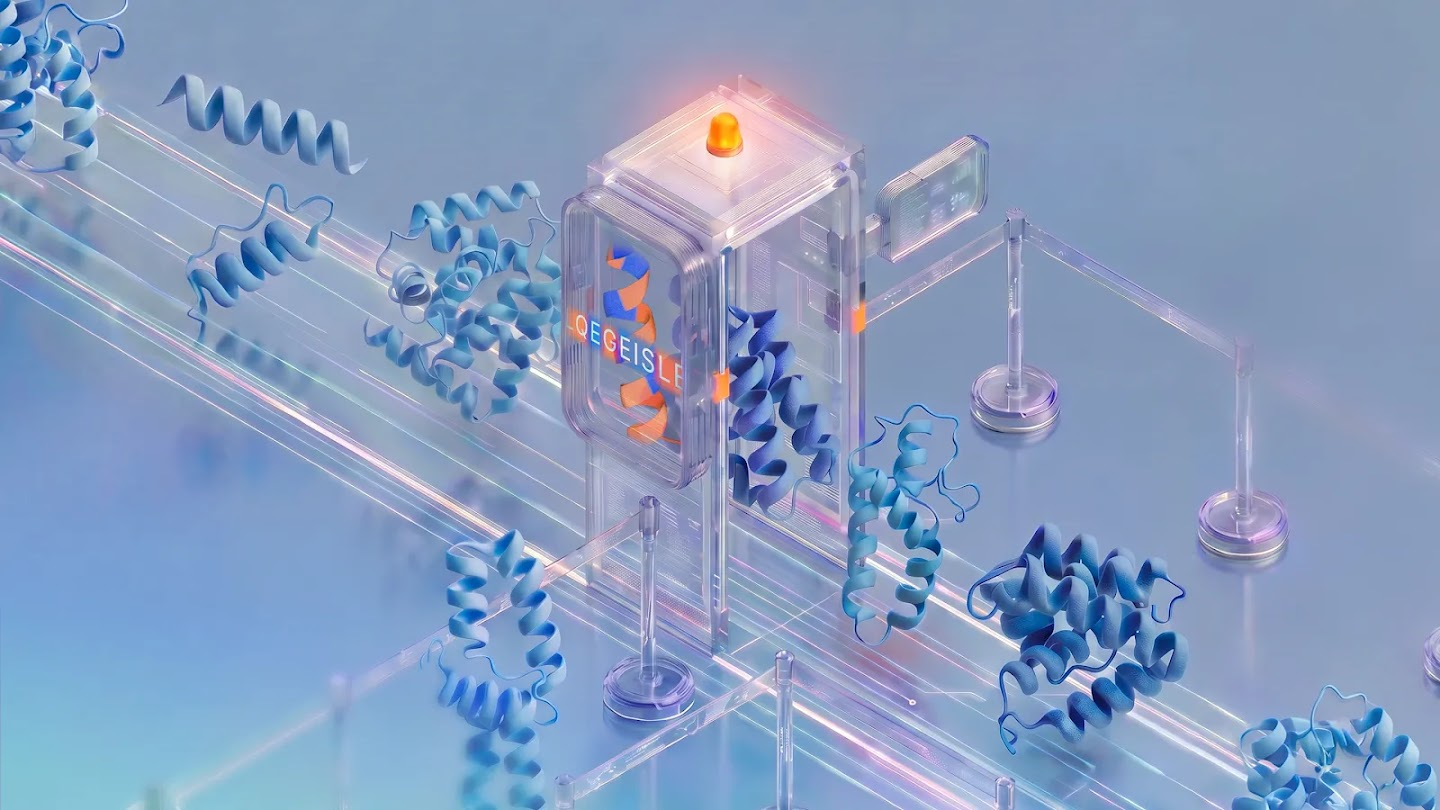
DeepMind releases SynthID Bio for AI-designed proteins
Google DeepMind published Introducing SynthID Bio on 30 September 2026 US time (1 October in Singapore). Pushmeet Kohli, David Stutz, Ali Cowen-Rivers and Jeremy Ratcliff signed the post.
DeepMind calls SynthID Bio "a family of watermarking methods developed specifically for synthetic biology." It says the watermark can be verified on the synthesized physical protein, as well as on the digital design.
The same day, Nature published the methods paper, Function-preserving watermarking of AI-generated proteins. Its abstract calls the work "a proof-of-concept that function-preserving biological watermarking is feasible."
Code is on GitHub under Apache 2.0
DeepMind says it is open-sourcing the code and in vitro data and releasing the weights to the research community. The synthidbio repository on GitHub carries the Apache License 2.0. It had 16 stars when The Frontier checked at 07:27 SGT on 3 October.
The post does not say whether the weights carry the same license.
DeepMind quotes two outside reviewers:
- Sarah Carter, Principal at Science Policy Consulting, said "SynthID Bio is an important piece of the puzzle for tracking the provenance of biological designs."
- James Diggans of Twist Bioscience said watermarking "could strengthen screening, focus resources on sequences that warrant closer review and make biosecurity more efficient."
Two methods for sequences and structures
DeepMind says the sequence method subtly guides the choice of amino acids. The structure method adjusts the atomic coordinates of predicted 3D structures.
- For binders, DeepMind used AlphaProteo with a SynthID Bio-enabled version of ProteinMPNN.
- DeepMind says wet-lab tests covered three targets: VEGF-A, the SARS-CoV-2 spike protein RBD and PD-L1.
- It says watermarked designs matched unwatermarked ones on hit rate, binding affinity and natural sequence diversity.
- DeepMind calls these "the first-ever watermarked and biologically functional protein binders."
- For folding, it fine-tunes a small part of AlphaFold 3's diffusion network so predicted coordinates carry the watermark.
- DeepMind says this keeps AlphaFold 3 prediction accuracy with "near-perfect detectability."
DeepMind says it is also working with the Hie lab at Stanford University and Arc Institute on Evo 2. It says early lab tests in bacteria cultures confirmed the watermarked bacteriophages are functional. A technical manuscript on that work is still to come.
Tampering is still unsolved
DeepMind says key challenges include "making the watermark more robust against deliberate tampering." The post says the structure watermark holds up against digital noise or minor coordinate changes.
The results are DeepMind's own. Nature accepted the paper on 29 July 2026 and published it open access. The post names Adaptyv Bio as helping with in vitro validation. No independent replication is cited yet.
By our reading, the watermark only marks designs from models that embed it. DeepMind describes SynthID Bio as one layer in a "Swiss cheese" defense model, alongside model mitigations and customer vetting.
DNA synthesis screeners and database curators
DeepMind pitches the watermark at two groups:
- DNA synthesis providers, which it says could use the signal to show an order came from a trusted model with built-in safeguards.
- Curators of open databases such as the Protein Data Bank, UniProt and GenBank, which it says could flag synthetic entries at submission.
Protein design teams can test the released code now. Screening providers can write to synthidbio@google.com to discuss partnering, per the post.
SynthID already watermarks Google's generated audio. See Google ships Gemini 3.8 Flash and Flash-Lite TTS on 23 September for API and AI Studio. DeepMind's other recent biology release is covered in AlphaGenome Atlas precomputes effects for 9 billion human DNA SNVs.